PLANNING : MISE - EN - SCENE
Mise en scène confines the most recognisable attributes of a film, theatre play or even a street show – the setting and the actors; it includes costumes and make-up, props, and all the other natural and artificial details that characterise the spaces filmed. The term is borrowed from a French theatrical expression, roughly meaning “put into the scene”. In other words, mise-en-scène describes all the things in the frame and the way it is presented and arranged. We have organised this page according to four general areas: setting, lighting, costume and staging. At the end we have also included some special effects that are closely related to mise-en-scène.
COSTUME:
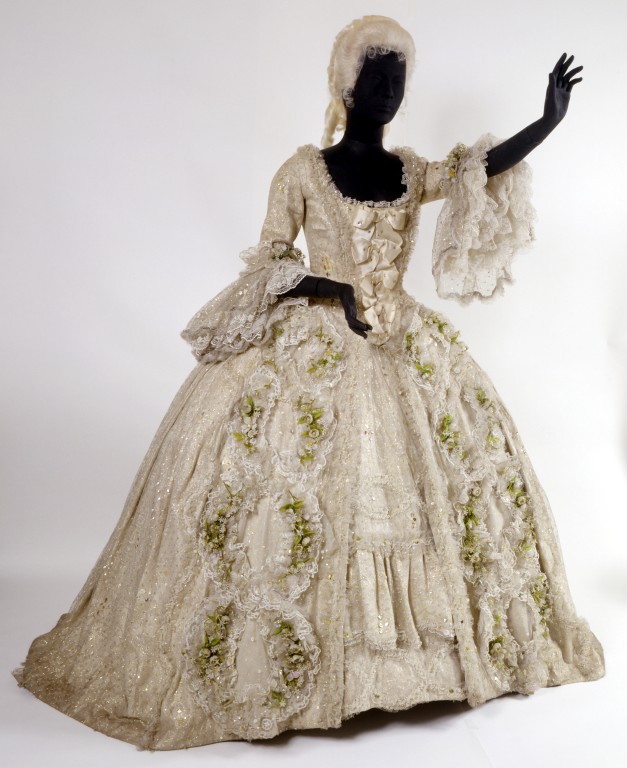
A costume simply refers to the clothes for the characters to wear. Also, it is a style of dress, including garments, accessories, and hairstyle, especially as characteristic of a particular country, period, hysterical or people. eg- this image beside shows a hysterical costume, you can tell that it is a costume because of the amount of material is on and how big it is, also the hair shows that it is hysterical as now a days no one dresses like that.

The definition of sets in film studies to put something in a particular place or position. in films or theater it is the surroundings for the characters in which something is placed.The scenery, properties, or background, used to create the location for a stage play.

Mise en scène confines the most recognisable attributes of a film, theatre play or even a street show – the setting and the actors; it includes costumes and make-up, props, and all the other natural and artificial details that characterise the spaces filmed. The term is borrowed from a French theatrical expression, roughly meaning “put into the scene”. In other words, mise-en-scène describes all the things in the frame and the way it is presented and arranged. We have organised this page according to four general areas: setting, lighting, costume and staging. At the end we have also included some special effects that are closely related to mise-en-scène.
COSTUME:
A costume simply refers to the clothes for the characters to wear. Also, it is a style of dress, including garments, accessories, and hairstyle, especially as characteristic of a particular country, period, hysterical or people. eg- this image beside shows a hysterical costume, you can tell that it is a costume because of the amount of material is on and how big it is, also the hair shows that it is hysterical as now a days no one dresses like that.
PROPS:
Props refers to objects in theater and film as characters use them. Props in film or theater are used for either decoration, display or characters using them. Props are good use in theater and filming because it also make it interesting and more realistic for the audience so that it can be more exciting. eg- in this image the man is holding a prop, the reason why it is interesting and realistic is that it is helping the man to guide or demonstrate what the man is portraying as if there was no props it will not look as interesting.
 |
SETS:
The definition of sets in film studies to put something in a particular place or position. in films or theater it is the surroundings for the characters in which something is placed.The scenery, properties, or background, used to create the location for a stage play.
SPACE:
The representation of space affects the reading of a film. Depth, proximity, size and proportions of the places and objects in a film can be manipulated through camera placement and lenses, lighting , decor, effectively determining mood or relationships between elements in the diegetic world.
DEEP SPACE:
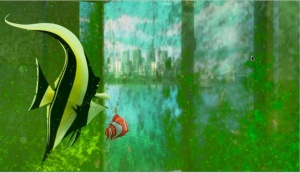
It is important that components in frames located both close to and far away from the camera. It is used to emphasise the distance between objects and/or characters, as well as any obstacles that exist between them. Deep space is used in this image frame to show how far away Nemo is from his father and the barriers separating them.
SHALLOW SPACE:
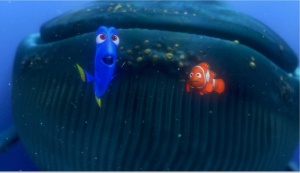
The opposite of deep space is of-course shallow space. Shallow space refers to a 2D flat space that may have width and density, but contains only a limited amount of depth. In shallow space, the image appears flat or two dimensional, because there is little or no depth. In this image from Finding Nemo, the whale is approaching Dory and Marlin from behind, which creates suspense for the viewer, because the fish are unaware of the whale’s presence and no one knows if it is good or bad. There is a loss of realism, but it enhances the viewing by emphasising the close proximity of the whale to Dory and Marlin and creating concern in the viewers that they may soon be eaten if so.
 |
OFFSCREEN SPACE:
spaces in the diegesis that is not physically present in the frame. The viewer becomes aware of something outside of the frame through either a character’s response to a person, thing, or event offscreen, or offscreen sound. In using offscreen space, directors enrol a more creative method of conveying the information to the viewer.

No comments:
Post a Comment